
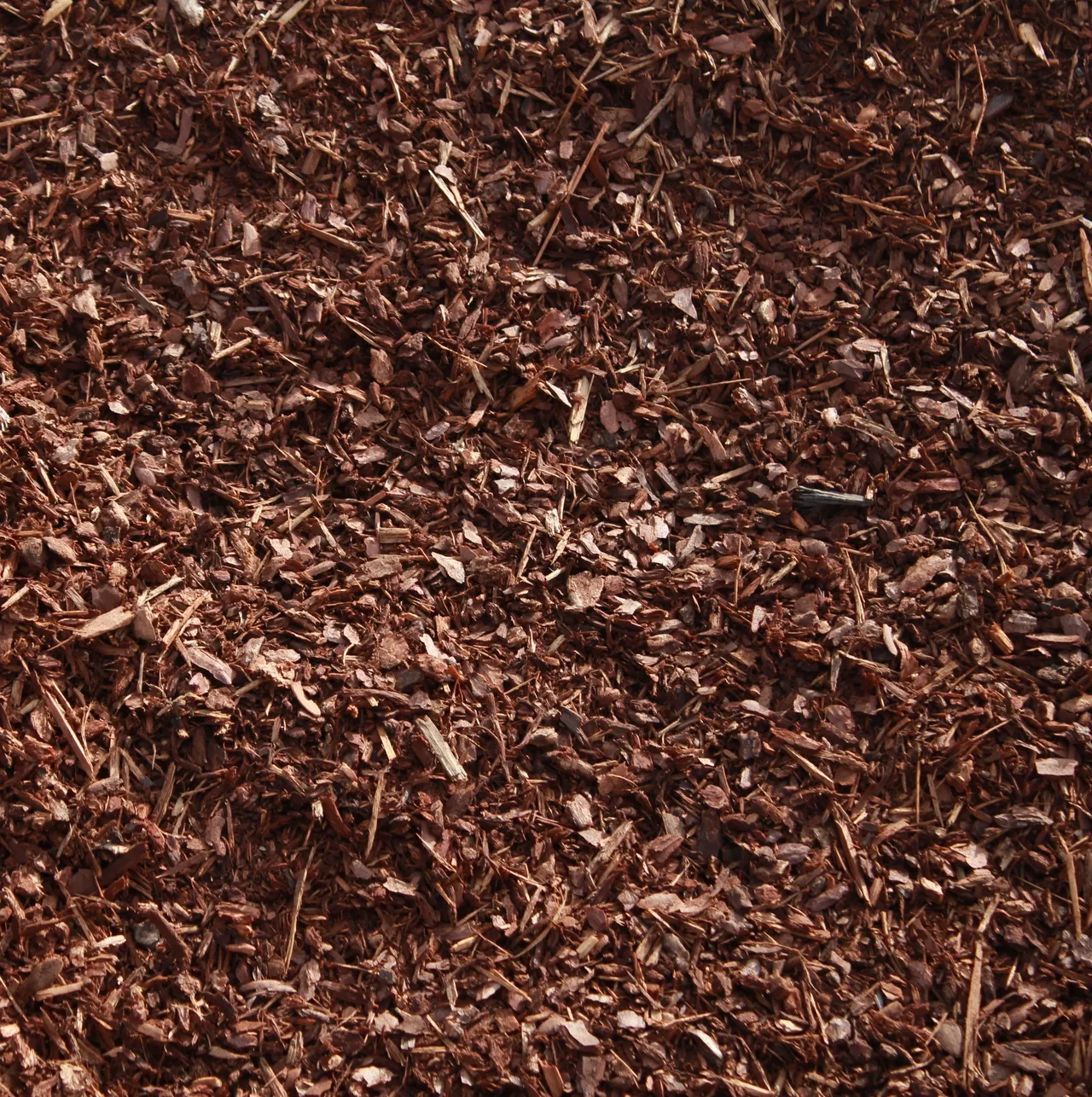

Blown-In Mulch vs. Hand-Spread Mulch: Which Is Better?
Summary / What You’ll Learn
Who this is for: Homeowners, HOA managers, commercial property owners, and landscape contractors in Spokane, Coeur d’Alene, and the Inland Northwest who are weighing whether a bark blowing service is worth it versus spreading mulch by hand.
Key takeaways:
- Blown-in mulch is significantly faster: a 2-person crew installs 10+ yards per hour versus 1 yard per person per hour by hand.
- Blown-in application produces more consistent depth and coverage than hand-spreading, which varies by crew skill and fatigue.
- The blower hose reaches areas a wheelbarrow never can: over fences, into tight side yards, and around corners without crossing your lawn.
- Hand-spreading works fine for small decorative beds. For anything over 500 square feet, blown-in is almost always the more practical choice.
- On larger projects, the labor cost of hand-spreading often makes blown-in installation the more cost-effective option.
- Advanced Bark Blowing has served Spokane and the Inland Northwest since 2000 with professional bark blowing for residential, commercial, HOA, and contractor clients.
What’s inside:
- How each method actually works
- A full side-by-side comparison across 10 factors
- Where each method wins and why
- The real cost difference between the two
- Which property types benefit most from blown-in installation
- Common mistakes made when spreading by hand
- 10 FAQs about blown-in mulch vs. hand-spreading
Every spring, the same question comes up for homeowners and property managers across the Inland Northwest: is it worth calling a bark blowing service, or is it just as easy to spread mulch by hand?
It’s a fair question. Hand-spreading mulch has been the standard approach for decades. Bags from the store, a wheelbarrow, a rake, and an afternoon. For a small flower bed, that works perfectly well. But for anything beyond a couple hundred square feet, the math changes quickly.
This guide breaks down both methods honestly: how they work, where each one performs well, what the actual cost difference looks like, and which situations genuinely call for a professional bark blowing service. By the end, you’ll know exactly which approach fits your project.
How Each Mulch Installation Method Actually Works
Hand-Spreading: The Traditional Approach
Hand-spreading is exactly what it sounds like. Mulch arrives in bags or as a bulk delivery dumped at the end of your driveway. From there, it gets loaded into a wheelbarrow, pushed to each area of the yard, and raked or spread by hand to the desired depth.
For small, accessible beds with simple layouts, this works. One person with a wheelbarrow and rake can cover a modest flower bed in an hour or two. The setup requires no equipment beyond basic tools, and you control the process yourself.
The limitations show up fast once the project grows. Bags of bark are heavy. Wheelbarrows don’t navigate well around tight corners, through narrow gates, or over fragile lawn areas. Raking consistently to a specific depth across a large area is harder than it looks, and fatigue leads to uneven spots. Cleanup afterward typically involves sweeping or blowing bark off driveways, walkways, and lawn edges.
Blown-In Mulch: How Bark Blowing Works
A bark blowing service uses a truck-mounted blower machine to deliver material through a large flexible hose directly to the target area. The material loads into a hopper on the truck, gets fed through a high-powered blower, and travels through the hose at a controlled rate.
The truck parks on the street or driveway. One crew member operates the hose while the other manages the truck. The hose extends well beyond the truck, meaning the crew can reach beds in the backyard, through gates, around corners, and into tight spaces without any equipment crossing your lawn.
Advanced Bark Blowing’s Express Blower trucks carry up to 60 cubic yards per load and install material at more than 10 yards per hour. A residential job that might take a crew a full day by hand is often finished in 2 to 3 hours. A large commercial or HOA project covering hundreds of yards gets done in a single day.
Because the material is delivered under pressure, it compacts into a consistent layer as it lands. No raking required. The result is clean edges, uniform depth across the whole area, and no piles of bark left on the driveway when the truck pulls away.
Blown-In Mulch vs. Hand-Spread Mulch: Side-by-Side Comparison
Here’s how the two methods stack up across the factors that matter most to homeowners and property managers:
| Factor | Blown-In Mulch | Hand-Spread Mulch |
| Speed | 10+ yards per hour with 2-person crew | 1 yard per person per hour |
| Coverage consistency | Even, uniform layer under pressure | Varies by crew skill and fatigue |
| Hard-to-reach areas | Hose reaches 50+ ft from truck; over fences, into tight corners | Limited by wheelbarrow access and foot traffic |
| Lawn and property damage | None; truck stays on street | Risk of ruts, compaction, and tracked bark |
| Material waste | Low; precise application reduces over-ordering | Higher; spills, overloading, uneven spots |
| Cleanup required | Minimal; no piles or mess left behind | Often significant; driveway bark, spills |
| Best for project size | Any size; especially 500+ sq ft | Small, simple beds under 200 sq ft |
| Labor required | 2-person professional crew | Multiple people for larger jobs |
| Overall cost efficiency | More efficient on larger projects once labor is factored in | Lower upfront; higher labor cost at scale |
The Real Cost Difference Between Blown-In and Hand-Spread Mulch
This is where most comparisons get oversimplified. People assume hand-spreading is cheaper because the labor appears free if you’re doing it yourself, or lower if you’re hiring a standard landscaping crew. That’s true on very small projects. It stops being true once the project grows past a few hundred square feet.
The Labor Math
A single person spreading mulch by hand can manage about 1 yard per hour. For a 10-yard job, that’s a full day of physical work. For a 20-yard job, you’re looking at two full days, or two people working all day. Factor in the cost of hiring that labor, and the hourly rate adds up fast.
A 2-person bark blowing crew installs 10 or more yards per hour. That same 20-yard job is done in 2 hours. You’re paying for equipment and expertise, but the labor hours are a fraction of hand-spreading.
Material Efficiency
Hand-spreading tends to waste more material. Uneven application means some spots get too thick and others too thin. You compensate by over-ordering. Spills off driveways and paths add up. Blown-in application is more precise, which means less material goes to waste and you’re less likely to need a second order to top off thin areas.
Where Hand-Spreading Wins on Cost
For a 100 to 200 square foot bed requiring 1 to 2 yards of bark, doing it yourself by hand makes total sense. The project is small enough that a wheelbarrow and 45 minutes of work gets the job done. Hiring a blowing crew for a job that small doesn’t make economic sense unless you’re bundling it with other work.
The crossover point where blown-in becomes competitive is typically around 500 square feet or 5 or more yards of material. Beyond that, the time savings and labor efficiency almost always make blown-in the better value.
Which Method Wins for Your Situation
The right answer depends on your project. Here’s a straightforward guide:
| Situation | Better Choice |
| Small decorative bed, 100 sq ft or less | Hand-spreading is fine |
| Full residential yard with multiple bed zones | Blown-in |
| HOA or apartment complex | Blown-in |
| Commercial property with tight timeline | Blown-in |
| Playground safety surface installation | Blown-in |
| Fenced yard with limited gate access | Blown-in |
| Steep slope or erosion-prone area | Blown-in |
| Landscape contractor with multiple job sites | Blown-in |
The pattern is clear. Hand-spreading has a place for small, simple, accessible jobs where you’re doing the work yourself. For anything larger, more complex, or with access challenges, blown-in installation wins on nearly every measure.
Common Mistakes Made When Spreading Mulch by Hand
Even experienced homeowners run into these issues when spreading bark manually. Knowing them in advance helps you avoid the most common outcomes that lead to redoing the job.
- Spreading too thin. The most common mistake. Two inches looks like a lot when you’re spreading it, but it compacts down quickly. Anything under 2 inches provides minimal weed suppression and won’t retain moisture effectively.
- Piling mulch against tree trunks. This traps moisture against the bark and creates conditions for rot and disease. Keep mulch pulled back 3 to 4 inches from any trunk or stem.
- Skipping the edges. The perimeter of a bed is where hand-spreading tends to go thin. Edges get less attention, and bark pushed by foot traffic or wind leaves gaps where weeds push through first.
- Over-spreading in some areas to compensate for thin spots elsewhere. The result is uneven depth across the bed and more material used than necessary.
- Not accounting for access. Hauling a loaded wheelbarrow through a narrow gate, over a deck, or across soft lawn leads to ruts, spills, and a lot of extra cleanup.
- Skipping weed control prep. Mulch slows weeds down but won’t stop them if the area isn’t cleared first. A weed barrier under the mulch adds significant long-term benefit that hand-application alone doesn’t provide.
Blown-in installation sidesteps most of these. The pressurized delivery creates a consistent layer, the hose handles access issues, and an experienced crew knows where thin spots tend to develop and accounts for them during application.
Which Property Types Benefit Most from Professional Bark Blowing
Residential Homeowners
For the average Spokane or Coeur d’Alene homeowner with multiple landscape beds, a side yard, and a back patio area, the combined square footage adds up quickly. Most residential projects that look manageable at first glance end up being a full weekend of hard physical work. Blown-in installation finishes the same job in a morning, with better results and no strain on your back or weekend.
HOAs and Multi-Property Communities
HOAs managing common areas, medians, and shared landscaping across multiple buildings are the most obvious fit for bark blowing. Consistency of appearance across the whole property matters, and a blowing crew delivers uniform depth and coverage in a single visit that a rotating group of maintenance staff simply can’t replicate by hand.
Commercial Properties
Office parks, retail centers, and industrial campuses need their landscaping done fast and with minimal disruption to business operations. Bark blowing achieves both. The truck stays at the curb. No crews walking across the property with equipment all day. The job gets done efficiently and the property looks sharp when the crew leaves.
Landscape Contractors
Subcontracting bark installation to Advanced Bark Blowing frees up your crew for other work. Instead of dedicating a full team to a labor-intensive mulch job, you hand off the installation and redirect your people to higher-margin work. Advanced Bark Blowing’s fleet installs hundreds of cubic yards per day, so even large contractor jobs get turned around quickly.
More from the Advanced Bark Blowing Blog
- What Is Bark Blowing? How the Service Works
- How Many Yards of Mulch Do I Need? Coverage Guide and Reference Table
- Bark for Landscaping: How to Choose the Right Type for Your Yard
- Why Playgrounds Use Wood Chips: Safety, Code and Best Practices
- The Complete Guide to Landscape Bark: Benefits, Types and How to Get It Applied
The Bottom Line
Both methods work. The question is which one works for your specific project.
Hand-spreading is a reasonable choice for a small, flat, easy-access bed where you’re doing the work yourself and the total material is 1 to 2 yards. Beyond that, the labor cost, the time commitment, the access limitations, and the consistency challenges all start working against it.
Blown-in mulch delivers faster installation, more consistent depth, better reach into difficult areas, and cleaner results with less mess. On projects over 500 square feet, it’s almost always the more practical and cost-effective choice when you account for total labor rather than just the quoted service price.
For homeowners, HOAs, commercial properties, and contractors across Spokane, Coeur d’Alene, Post Falls, Sandpoint, and the surrounding Inland Northwest, Advanced Bark Blowing has been the professional choice since 2000. The fleet handles everything from single residential yards to multi-site commercial contracts, and every job comes with a free quote so you know exactly what you’re getting before any work begins.
Ready to Skip the Wheelbarrow?
Get a free quote from Advanced Bark Blowing. We’ll assess your property, recommend the right bark variety, and give you a clear price with no surprises. Most residential jobs are finished in a few hours. Commercial and HOA projects get scheduled and completed efficiently with our full blower fleet.
Call (208)-777-2700 | advancedbark.com
Frequently Asked Questions: Blown-In Mulch vs. Hand-Spread Mulch
1. Is blown-in mulch better than hand-spreading?
For most projects over 500 square feet, yes. Blown-in mulch installs faster, more consistently, and with better access to difficult areas than hand-spreading. The main advantage of hand-spreading is cost on very small jobs where you’re doing the work yourself. For any project requiring 5 or more yards of material, blown-in is almost always the better choice on total value.
2. How much faster is a bark blowing service than hand-spreading?
Significantly faster. A 2-person bark blowing crew installs 10 or more yards per hour. A single person spreading by hand manages about 1 yard per hour. On a 20-yard residential job, that’s the difference between 2 hours and a full 2-person day of labor.
3. Does blown-in mulch look different from hand-spread mulch?
It often looks better. Blown-in mulch settles into a smoother, more uniform layer than hand-spread material because the pressurized delivery compacts it consistently as it lands. You don’t get the rake marks, thin spots, or uneven clumping that can come with manual spreading.
4. Can a bark blower reach my backyard if the gate is narrow?
In most cases, yes. The blower hose extends well beyond the truck, typically 50 or more feet, so the crew can park on the street and reach beds in your backyard without any equipment crossing your lawn or fitting through a gate. This is one of the biggest practical advantages of blown-in installation.
5. Will the truck damage my lawn or driveway?
No. The truck stays on the street or hard surface. The only thing crossing your lawn is the hose itself, which is lightweight and flexible. There are no wheelbarrow ruts, no equipment tracks, and no compaction damage to soft lawn areas.
6. Is blown-in mulch more expensive than hand-spreading?
The service costs more than buying bags yourself. But when you account for labor, time, and material efficiency, blown-in is frequently the more cost-effective option on larger projects. Hand-spreading a 20-yard job yourself or with hired labor takes a full day or more and often requires over-ordering to compensate for waste. A blowing crew finishes the same job in a couple of hours with less material waste.
7. What types of bark can be blown in?
Advanced Bark Blowing installs five varieties: Medium Red Fir, Dark Fines, Fresh Fines, Nuggets, and Playground Chips. All five are installed by the same blowing process. The right choice depends on your project type, aesthetic preference, and whether you need a safety-rated material for playground surfaces.
8. Is hand-spreading ever the better choice?
Yes, for very small projects. If you have a single small bed under 200 square feet and easy access, spreading 1 to 2 yards by hand yourself is a perfectly reasonable approach. The economics of hiring a professional blowing service don’t make sense at that scale unless you’re combining it with other work on the property.
9. Do you work with landscape contractors, not just homeowners?
Yes. Advanced Bark Blowing works with landscape contractors across the Inland Northwest who want to subcontract bark installation rather than tying up their own crews. The fleet handles large contractor volumes quickly, and the turnaround lets contractors take on more jobs without adding headcount.
10. How do I get a bark blowing quote in Spokane or North Idaho?
Call (208)-777-2700 or submit a request for a Free Quote here. Advanced Bark Blowing serves Spokane, Coeur d’Alene, Post Falls, Sandpoint, and surrounding Inland Northwest communities. The team will assess your property, recommend the right material, and give you a clear estimate with no obligation.


