


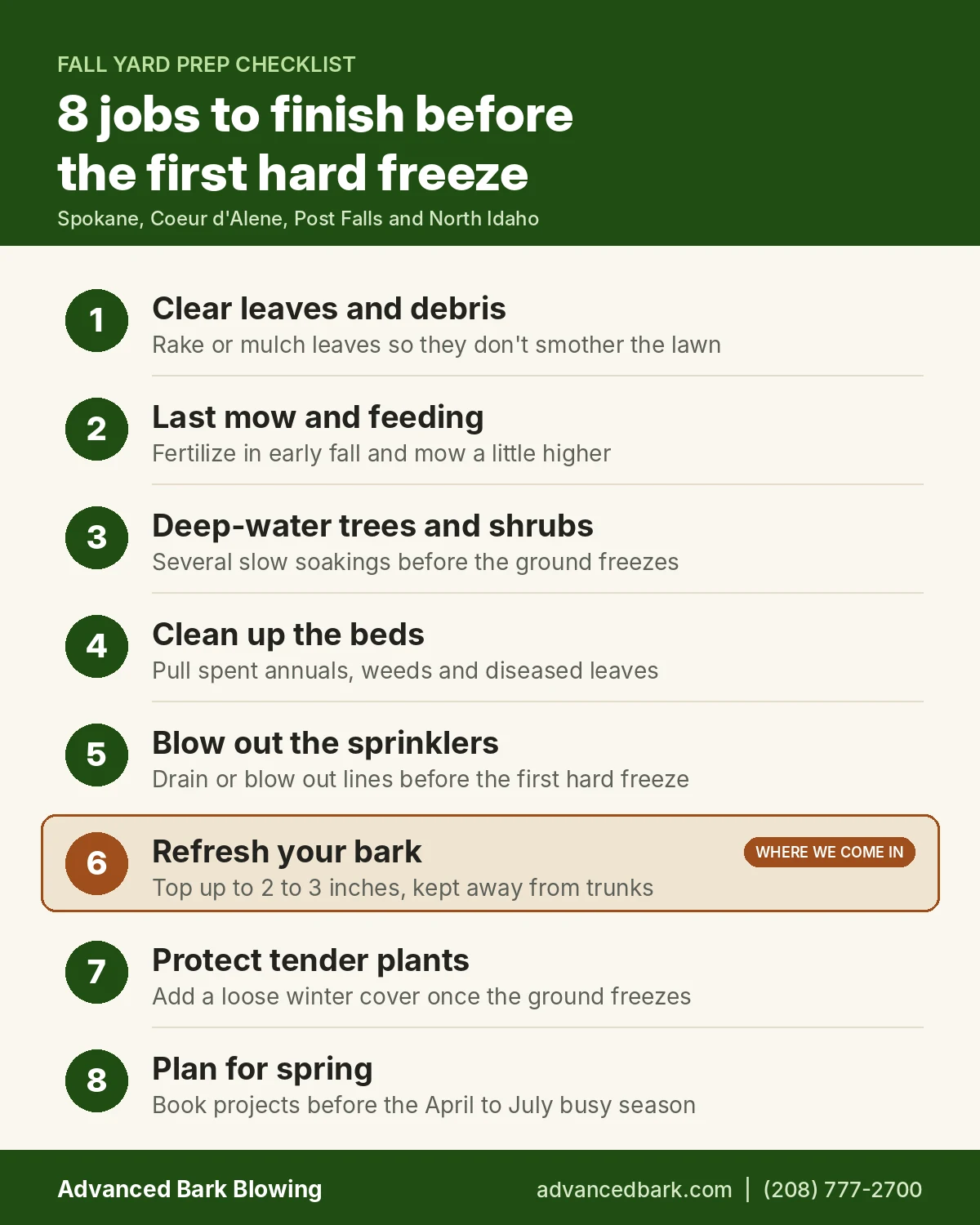
Prepping your yard for fall comes down to eight jobs: clear the leaves, give the lawn its last mow, water trees deeply, tidy the beds, shut down the sprinklers, refresh your bark, protect tender plants, and plan for spring. Do them in roughly that order between the first cool nights and the first hard freeze, and your landscape comes out of winter healthier and with a lot less spring cleanup.
Here in Spokane, Coeur d’Alene, Post Falls and the rest of the Inland Northwest, fall can turn quickly. One week is short sleeve weather, and the next has frost on the windshield. This checklist walks you through each step, explains why it matters in our climate, and shows where a fresh layer of landscape bark fits in.
When to start prepping your yard for fall
The right time depends on your first frost, not the calendar. According to the WSU Spokane County Master Gardeners, the average first frost in our area can land anywhere from early to late fall depending on where you live, and several weeks of mild weather usually follow it. That mild stretch is your window.
A simple rule of thumb: start the cleanup jobs when the leaves begin to drop, and finish the bark and watering jobs before the ground freezes. Higher elevation neighborhoods and spots north toward Sandpoint usually cool off first, so start a little earlier there.
Your fall yard prep checklist at a glance
Print this out or keep it on your phone. Each step is explained in detail below.
- Rake or mulch fallen leaves so they do not smother the lawn.
- Fertilize one last time in early fall and set the mower a little higher for the final cut.
- Give trees and shrubs, especially evergreens, several deep soakings before the freeze.
- Clean out beds and remove dead or diseased plant material.
- Shut off and drain or blow out your irrigation system.
- Top up landscape bark to 2 to 3 inches, keeping it away from trunks.
- Add winter protection to tender plants once the ground freezes.
- Book spring projects early, before the busy season fills up.
Step 1: Clear leaves and debris
A thick mat of wet leaves blocks light and traps moisture, which can leave dead patches in your lawn by spring. WSU Extension recommends raking leaves off the lawn and clearing fallen leaves and fruit from garden areas to cut down on disease and pests over winter.
Healthy leaves do not have to go to waste. Shredded leaves can be tucked into borders as a light winter cover, and leaving some old flower heads standing gives birds something to eat through the cold months. Just keep diseased leaves out of your beds and compost.
Step 2: Give your lawn its last mow and feeding
Your lawn is still growing roots well into fall, so this is the time to set it up for spring. WSU Extension suggests a final fertilizer application in early October and a last mowing that is slightly higher than your usual summer height. Longer blades help the grass store energy and handle the cold.
If your lawn is compacted from a summer of foot traffic, early fall is also a good time to aerate while the soil is still workable.
Step 3: Water trees and shrubs deeply before the ground freezes
This is the step most homeowners skip, and it is one of the most important in our dry climate. Evergreens keep losing moisture through their needles all winter, and if their roots go into the freeze dry, you often see brown, burned foliage in spring.
WSU Extension recommends several deep soakings for trees and shrubs before the ground freezes, with extra attention to evergreens and plants growing under eaves, where rain and snow rarely reach. Water slowly so it soaks down to the roots instead of running off.
Step 4: Clean up beds and cut back perennials
Pull spent annuals, remove dead or diseased leaves and stalks from perennials, and get the weeds out now while their roots are easy to lift. Every weed you pull in fall is one less that goes to seed in spring.
Clean beds also make the next step easier. Bark goes down evenly on a tidy bed, and you get the full weed blocking benefit instead of burying weeds that will push through later. If weeds are a constant battle in your beds, our guide on whether mulch really prevents weeds explains what to expect.
Step 5: Shut down and blow out your sprinkler system
Water left in irrigation lines can freeze, expand and crack pipes, valves and sprinkler heads. Turn the system off before the first hard freeze and drain it or have the lines blown out with compressed air. Drip lines and hose bibs need the same attention.
Time this after your deep watering in step 3. Once the sprinklers are off, you can still water individual trees with a hose on mild days.
Step 6: Refresh your bark before the snow
A fresh layer of landscape bark is the step that ties the whole fall checklist together. It insulates roots against our freeze and thaw swings, holds in the moisture from your deep watering, keeps soil from washing away during snowmelt, and gives you a head start on weeds in spring. We cover the benefits in more detail in 5 ways a fall bark application protects your landscape.
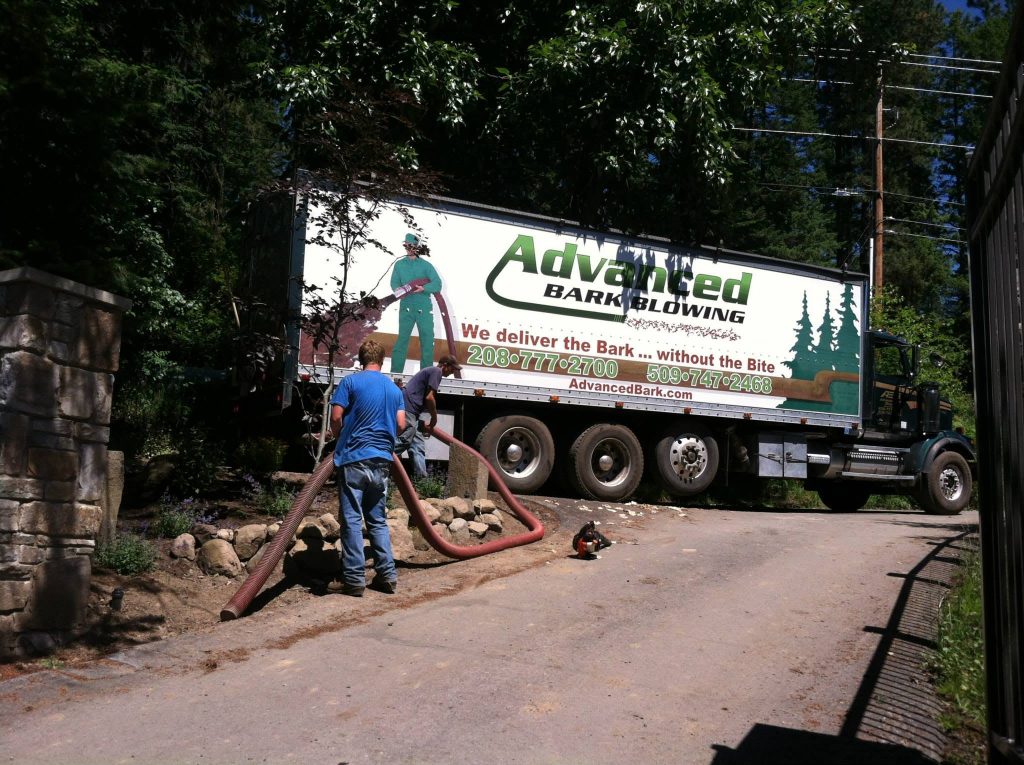
The key is getting it down before snow covers your beds. Bark can be blown straight over older, faded mulch, so you do not need to remove what is already there. As the old layer breaks down, it feeds the soil underneath.
How deep should fall bark be?
For most landscape beds, 2 to 3 inches is the sweet spot. That matches the guidance in WSU Extension’s Guide to Mulches, which notes that 2 to 3 inches of bark is usually enough for weed control. Go deeper and you risk keeping the soil too wet.
Keep bark from piling up against tree trunks and shrub stems. WSU recommends spreading it out from about 6 inches away from the trunk, ideally to the drip line, because mulch packed against bark invites insects and rodents.

Which bark works best for fall?
Each bark type does a slightly different job. Medium Red Fir is a classic, durable choice for most beds. On slopes, finer textures like Fresh Fines and Dark Fines knit together and hold in place through rain and snowmelt. Bark nuggets last a long time on flat ground but can roll on steep hills. You can compare all five options on our landscape bark blowing services page.

How much bark do you need?
One cubic yard covers about 162 square feet at 2 inches deep, or 108 square feet at 3 inches. Measure your beds, multiply the square footage by the depth in inches, and divide by 324 to get cubic yards. Our mulch coverage guide has a full table and tips for odd shaped beds.
Step 7: Protect tender plants and young trees
Most established landscape plants are fine under a normal layer of bark. Tender perennials, roses and strawberries need extra help. WSU Extension advises waiting until the ground has frozen, then adding a loose winter cover such as straw, pine needles or leaves to keep the soil frozen and prevent the heaving that damages roots.
Young trees with thin bark can also benefit from a tree wrap, and tying tall rose canes together helps keep heavy snow from snapping them.
Step 8: Plan ahead for spring
Fall is the best time to look at your landscape and decide what you want next year, because you can see exactly where beds thinned out or washed away. Make a note of those spots now.
Spring and early summer are the busiest months for bark installation, and our busy season runs from April to July. If you have a smaller project, the less busy months are often the easiest time to get on the schedule.
Common fall yard prep mistakes to avoid
- Piling bark against tree trunks, which traps moisture and invites pests.
- Spreading bark over wet, matted leaves instead of clearing them first.
- Skipping the deep watering, then finding winter burn on evergreens in spring.
- Laying plastic under bark, which blocks water and air and leaves the soil too dry or moldy.
- Waiting until the first snow to think about bark, when beds are already covered.
Fall yard prep FAQs
Is fall a good time to put down bark?
Yes. Fall bark insulates roots through winter, holds moisture in the soil, protects against erosion during snowmelt, and helps keep spring weeds down. Get it down before snow covers your beds.
Can new bark go over old mulch?
Yes. Fresh bark can be blown over old, faded mulch. As the old layer breaks down, it enriches the soil beneath the new one.
How deep should mulch be for winter?
About 2 to 3 inches for landscape bark in most beds, kept a few inches back from tree trunks and shrub stems. Tender plants can get an extra loose winter cover once the ground freezes.
Should I rake leaves before putting down bark?
Yes. Clear thick or diseased leaves first so the bark sits evenly on the soil. Healthy shredded leaves can stay in borders as a light cover.
Do you serve my area?
Advanced Bark Blowing serves Spokane, Post Falls, Coeur d’Alene, Sandpoint and surrounding North Idaho communities.
Get your yard ready for winter with Advanced Bark Blowing
Most of this checklist is a weekend of work. The bark step does not have to be. Our blower trucks put down an even layer of bark in a fraction of the time it takes by hand, reach tight side yards and slopes, and we clean up when we are done.
Call us at (208) 777-2700 or request a free bark blowing quote to get your beds covered before the snow flies.


